

In today’s competitive digital marketplace, businesses need more than traditional advertising to attract and retain customers. Customers are constantly exposed to advertisements, social media posts, influencer content, and promotional campaigns. Because of this, brands are looking for creative ways to stand out, connect with new audiences, and build stronger relationships with customers.
One of the most effective strategies is brand collaboration.
Brand collaborations involve two or more businesses working together to achieve a shared marketing or business goal. A collaboration can involve creating a new product, launching a social media campaign, organizing an event, offering discounts, creating content, or running a giveaway.
The main advantage of brand collaboration is that each business can benefit from the other brand’s audience, reputation, creativity, and resources. Instead of competing for attention separately, brands can combine their strengths to create something more valuable.
For example, a clothing company could collaborate with a footwear brand to create a limited-edition collection. Both brands can promote the collection to their own audiences, helping each business reach potential customers who may not have discovered them otherwise.
When planned correctly, brand collaboration marketing can increase brand awareness, engagement, customer acquisition, and sales.
What Are Brand Collaborations?
A brand collaboration is a partnership between two or more brands where they work together on a specific campaign, product, service, event, or marketing activity.
The collaboration should provide value to everyone involved. The brands should have compatible audiences, complementary products or services, or similar values.
For example, a fitness clothing brand might collaborate with a fitness equipment company. Both businesses target people interested in fitness, but they offer different products. This makes the partnership beneficial because the brands can introduce their products to each other’s audiences.
Brand collaborations can be short-term or long-term. Some collaborations may last for a single campaign, while others can develop into ongoing brand partnerships.
The key idea is simple: instead of trying to grow alone, businesses work together to create opportunities for mutual growth.
Why Are Brand Collaborations Important?
The digital marketing environment has become highly competitive. Businesses are competing not only with direct competitors but also with thousands of other brands for customers’ attention.
Brand collaborations provide an opportunity to break through this competition.
1. Reach New Audiences
One of the biggest benefits of brand collaborations is access to a new audience.
Imagine Brand A has 50,000 followers and Brand B has 30,000 followers. If both brands collaborate on an interesting campaign, they can potentially expose the campaign to both audiences.
This does not mean every follower will become a customer, but it creates an opportunity to introduce the brand to people who may not have discovered it otherwise.
2. Increase Brand Awareness
Repeated exposure helps people remember a brand. When two businesses collaborate, both brands receive additional visibility.
A well-designed collaboration can appear across Instagram, websites, email newsletters, YouTube, blogs, and other digital channels.
This increased exposure can help build brand recognition over time.
3. Build Credibility
Customers often trust brands that have established a positive reputation.
When a respected business collaborates with another brand, the partnership can create a positive association. Customers may become more interested in a business because they already trust its collaboration partner.
However, businesses should choose partners carefully because a poor partnership can also negatively affect reputation.
4. Generate More Engagement
Collaborative campaigns often create more opportunities for interaction.
Giveaways, contests, limited-edition products, polls, challenges, and creative social media campaigns can encourage audiences to comment, share, save, and participate.
Higher engagement can also increase organic visibility on social media platforms.
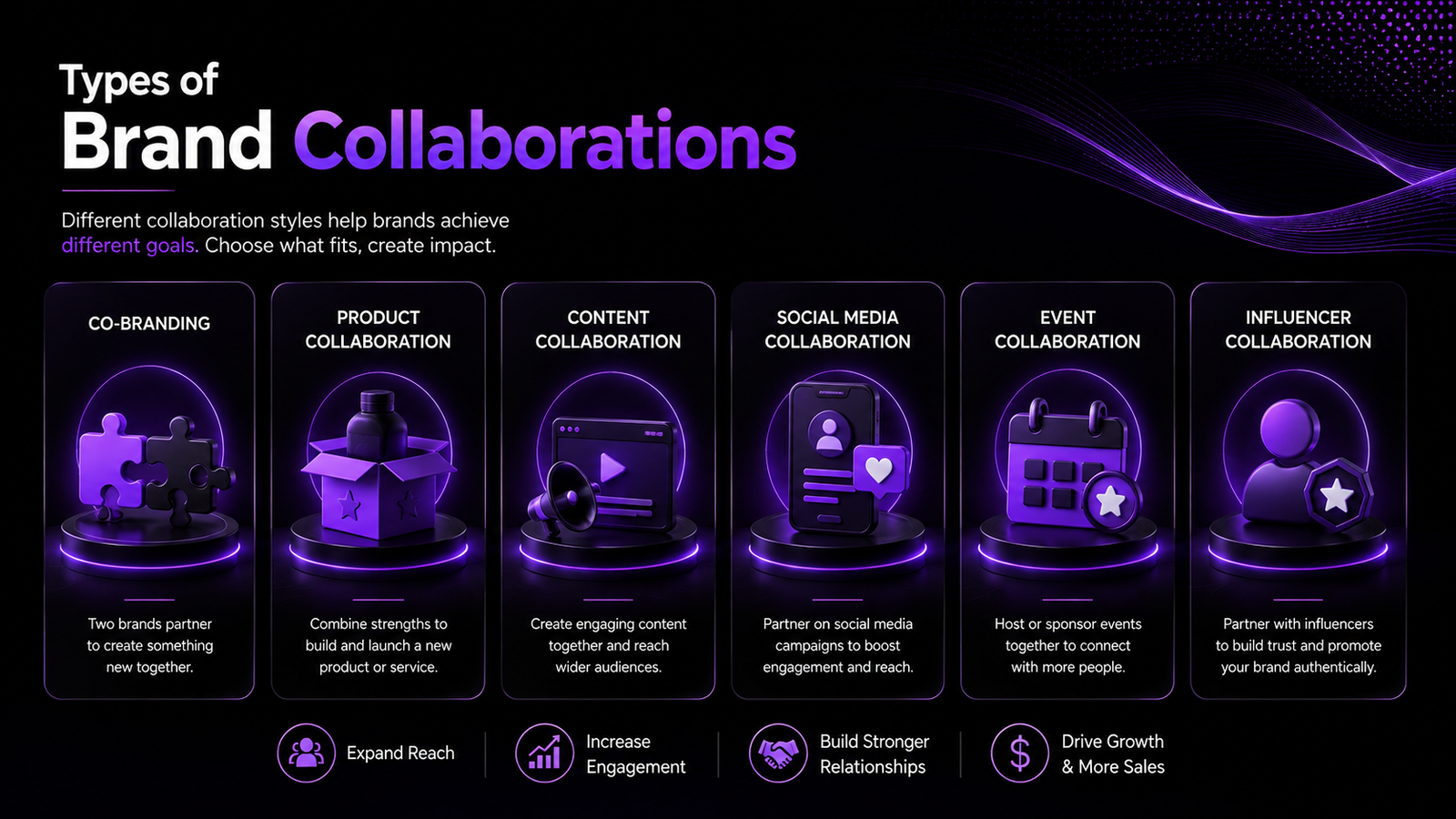
Types of Brand Collaborations
There are many different forms of brand collaboration. Businesses can choose a format depending on their goals, audience, budget, and industry.
1. Product Collaboration
Two brands can work together to create a new product.
For example, a clothing brand and a sneaker company could launch a limited-edition collection.
Product collaborations can create excitement because customers get something that is different from the brands’ normal products.
Limited availability can also create a sense of exclusivity.
2. Social Media Collaboration
Social media is one of the easiest ways for brands to collaborate.
Businesses can create:
- Instagram Reels
- Joint posts
- Instagram Lives
- Stories
- Challenges
- Giveaways
- Educational videos
- Behind-the-scenes content
Social media collaborations are especially useful for small businesses because they can be created with relatively low budgets.
3. Content Collaboration
Brands can collaborate on educational or entertaining content.
For example, two businesses could create a blog article, podcast episode, YouTube video, webinar, or downloadable guide.
Content collaborations can provide value to audiences while helping both brands establish authority in their industries.
4. Event Collaboration
Businesses can organize events together.
These could include:
- Workshops
- Product launches
- Networking events
- Webinars
- Seminars
- Community events
- Pop-up stores
Events allow brands to interact directly with their target audience.
5. Giveaway Collaboration
Giveaways are popular on social media because they encourage audience participation.
Several brands can contribute products or services as prizes. Each brand then promotes the giveaway to its own audience.
A properly planned giveaway can increase followers, engagement, awareness, and website traffic.
However, businesses should focus on attracting relevant followers rather than simply increasing follower numbers.
6. Influencer and Brand Collaboration
A brand can also collaborate with an influencer or content creator.
Influencers already have an established relationship with their audience. A collaboration allows the brand to introduce its products or services through content that feels more personal.
This is different from a traditional advertisement because the creator can present the product using their own style and voice.
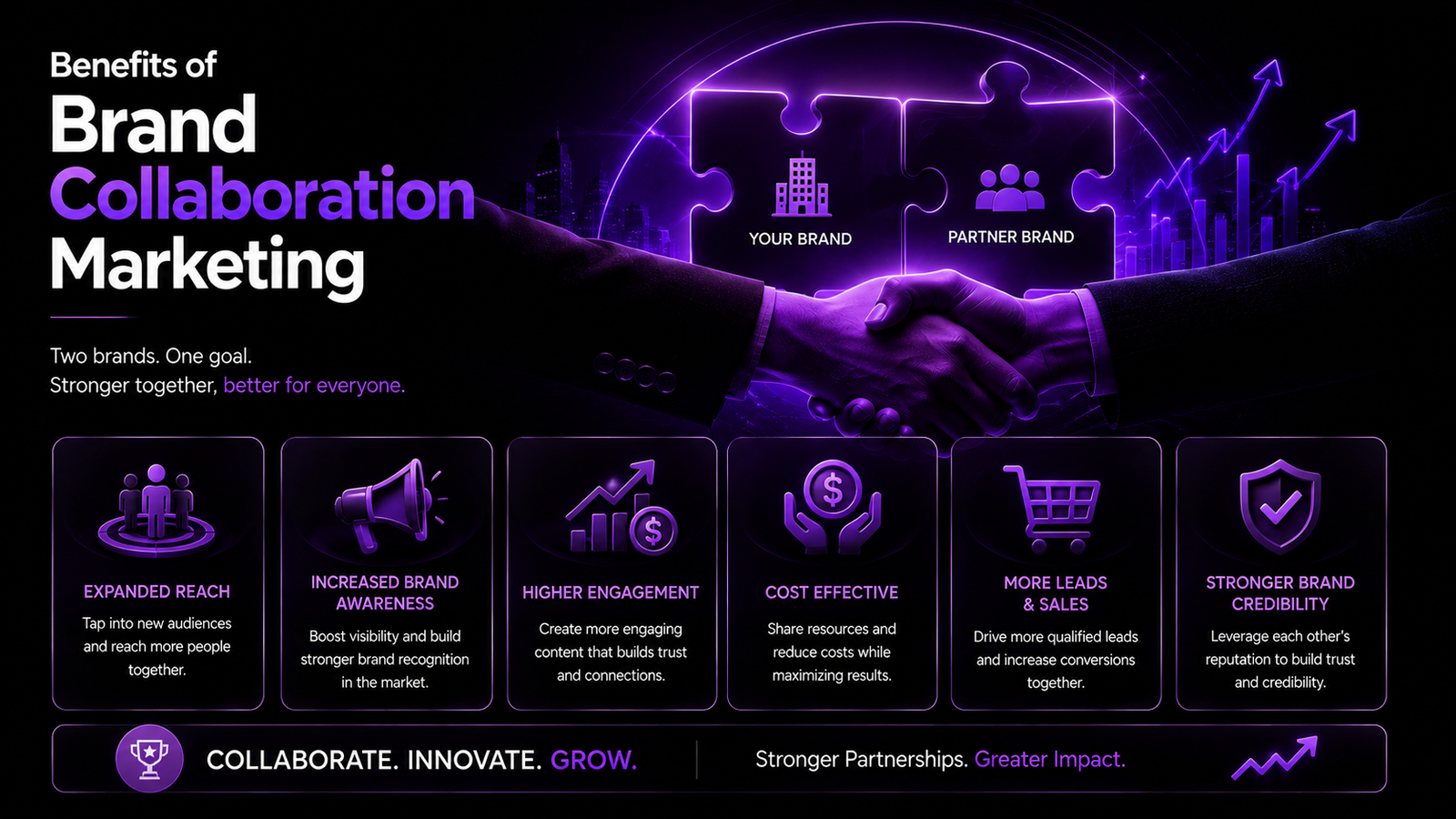
Benefits of Brand Collaboration Marketing
A strong brand collaboration strategy can provide several business benefits.
Increased Reach
Both brands can promote the campaign through their existing channels, giving the campaign a larger potential audience.
Cost Sharing
Some collaborations allow businesses to share production, advertising, event, or content costs.
Creative Ideas
Different teams bring different perspectives. Collaboration can therefore lead to creative campaigns that one business may not have developed independently.
Customer Acquisition
A collaboration can introduce a business to potential customers who are already interested in a related product or service.
Stronger Brand Positioning
Working with a respected and relevant brand can strengthen how customers perceive a business.
More Content
Collaborations can generate multiple pieces of content that can be reused across social media, websites, blogs, and email marketing.
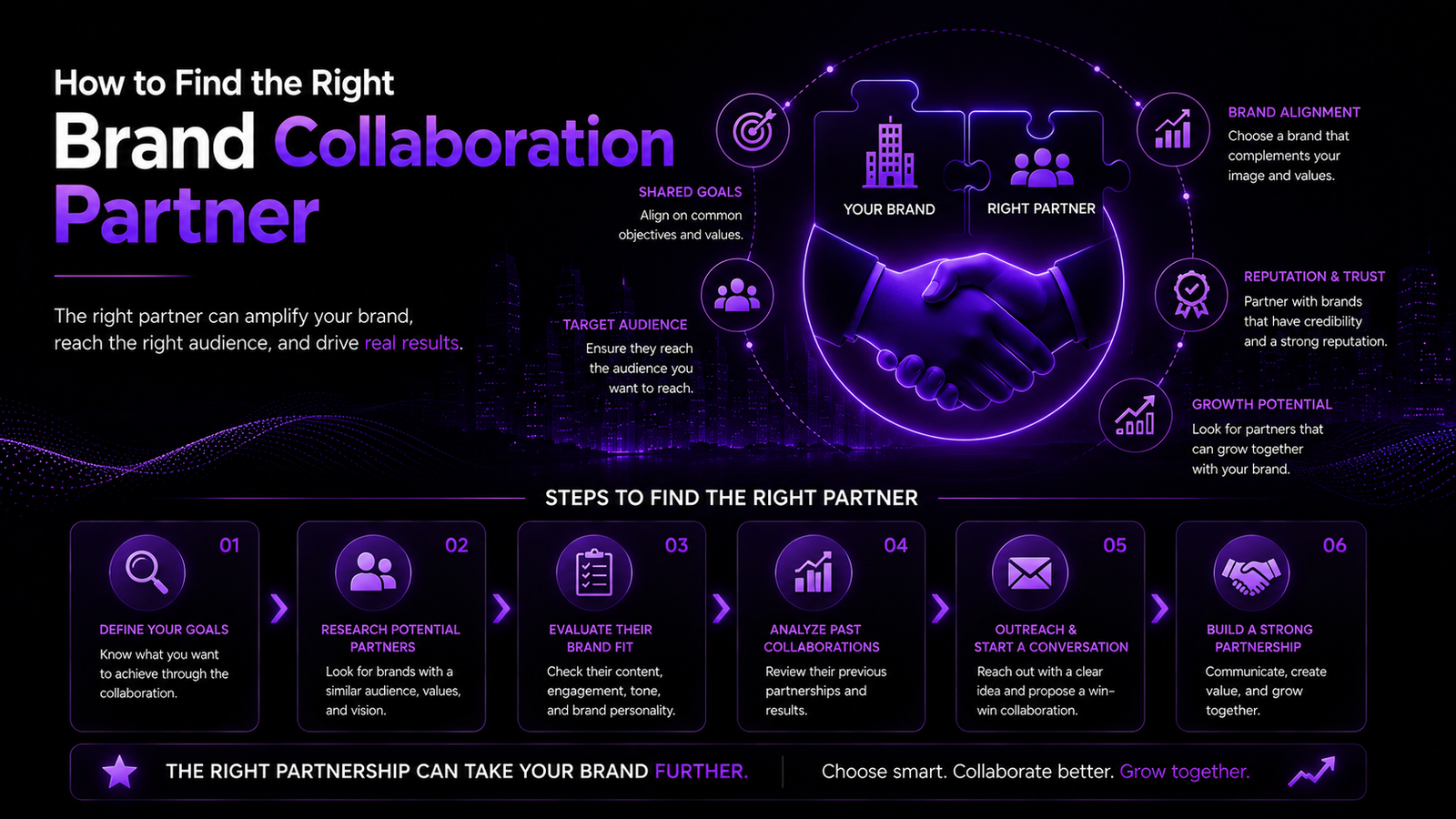
How to Find the Right Brand Collaboration Partner
Choosing the right partner is one of the most important parts of a successful collaboration.
A business should not choose a partner simply because it has a large number of followers.
Instead, consider the following factors.
Target Audience
The partner should ideally reach people who are relevant to your business.
For example, a sportswear company would benefit more from collaborating with a fitness brand than with a business whose audience has no connection to sports.
Brand Values
Both brands should have compatible values.
If one company focuses on sustainability while its partner has a completely different reputation, the collaboration may confuse customers.
Reputation
Research the potential partner before starting the collaboration.
Look at their online presence, customer reviews, social media activity, previous partnerships, and overall reputation.
Engagement
Follower count is not everything.
A smaller brand with an active and engaged audience may provide better results than a larger account with very low engagement.
Goals
Both brands should have compatible goals.
If one brand wants awareness while the other expects immediate sales, the partnership may create unrealistic expectations.
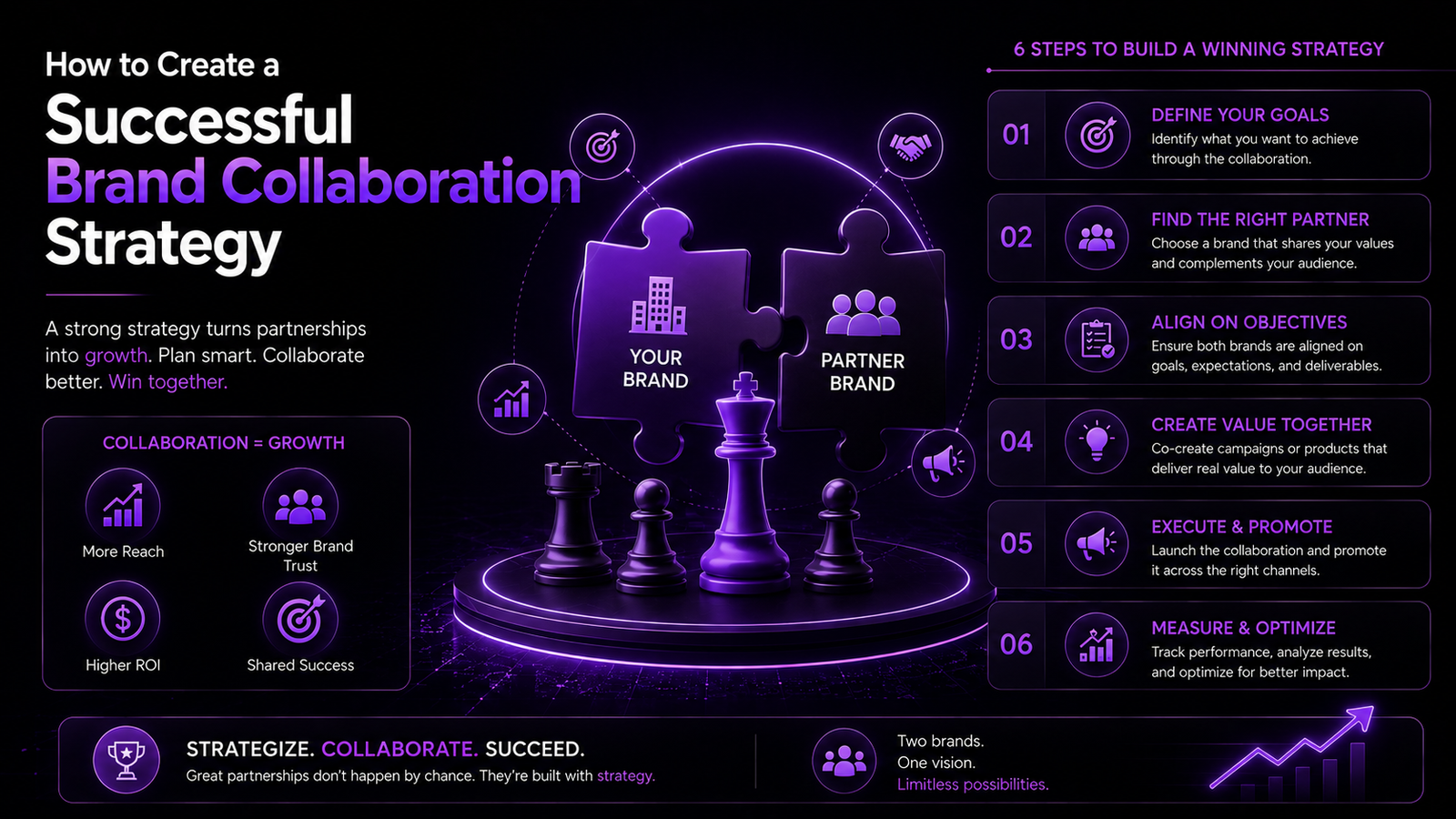
How to Create a Successful Brand Collaboration Strategy
A successful collaboration requires proper planning.
Step 1: Define Your Goal
Start by deciding what you want to achieve.
Your goal could be:
- Increase brand awareness
- Generate leads
- Increase website traffic
- Gain new customers
- Increase sales
- Grow social media engagement
A clear goal makes it easier to measure success.
Step 2: Identify Potential Partners
Create a list of businesses that have a relevant audience and complementary products or services.
Research each potential partner before contacting them.
Step 3: Develop a Collaboration Idea
Do not simply ask another business to “collaborate.”
Create a specific idea.
For example:
“We could create a joint Instagram campaign where customers receive a discount when they purchase products from both brands.”
A clear idea makes your proposal more professional.
Step 4: Decide Responsibilities
Both businesses should understand who is responsible for:
- Content creation
- Advertising
- Product costs
- Event organization
- Customer support
- Social media promotion
Clear responsibilities prevent misunderstandings.
Step 5: Promote the Campaign
Use multiple marketing channels.
Both brands can promote the campaign through social media, email, websites, blogs, paid advertising, and influencers.
Step 6: Measure the Results
After the campaign, analyze the performance.
Look at reach, engagement, website traffic, leads, conversions, sales, and customer acquisition costs.
This helps determine whether the collaboration achieved its objectives.
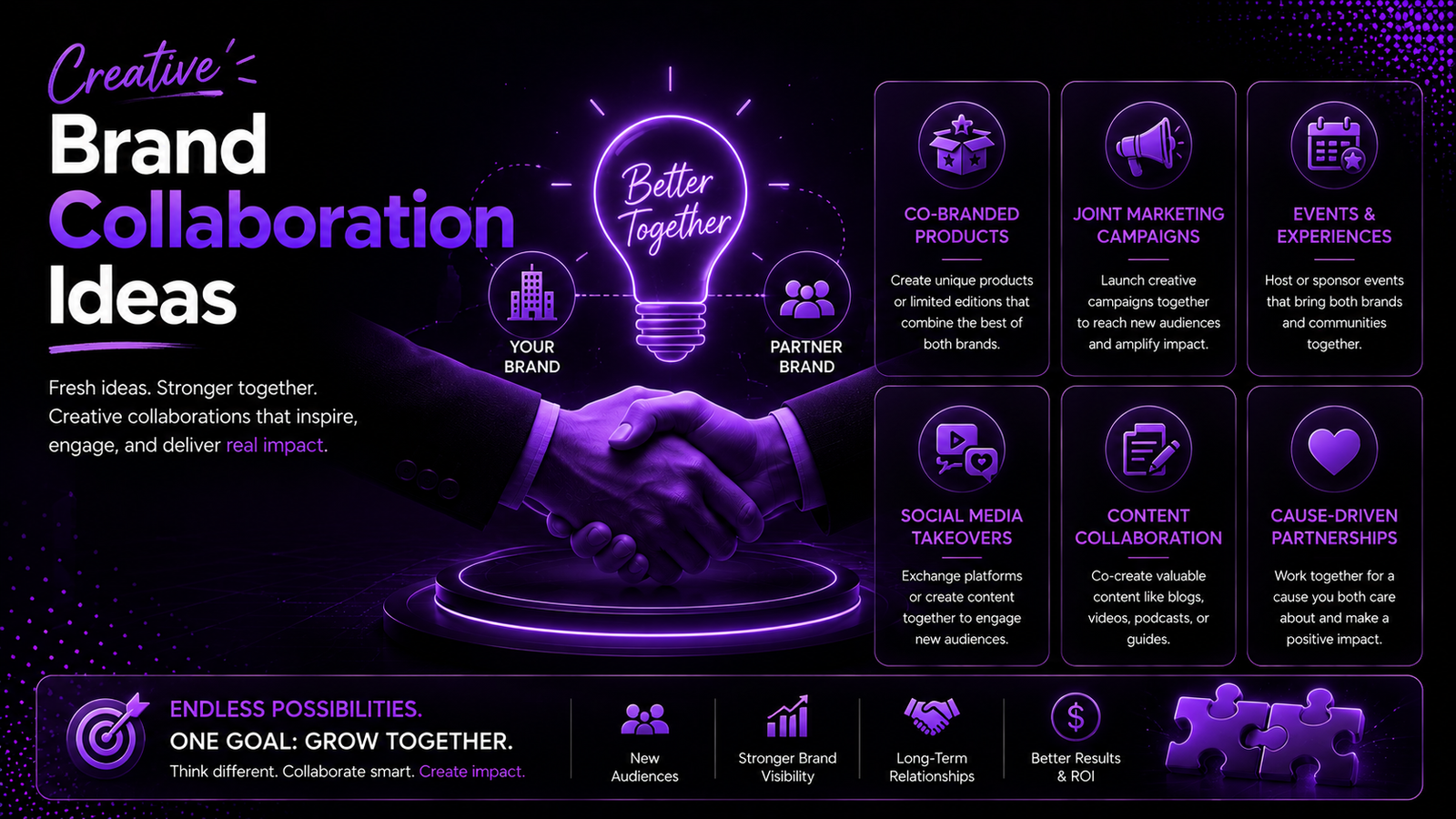
Creative Brand Collaboration Ideas
Businesses can experiment with different collaboration formats.
Limited-Edition Products
Create a product that is available for a limited time.
Joint Giveaways
Multiple brands can provide prizes and promote the giveaway together.
Educational Webinars
Two businesses can share their expertise through a free online session.
Social Media Challenges
Create a challenge that encourages users to participate and share content.
Co-Branded Content
Create blogs, videos, guides, or podcasts together.
Seasonal Campaigns
Brands can collaborate during festivals, holidays, or special occasions.
Discount Partnerships
Customers who purchase from one brand can receive an exclusive discount from the partner brand.
The best idea depends on the audience and objectives of the businesses involved.
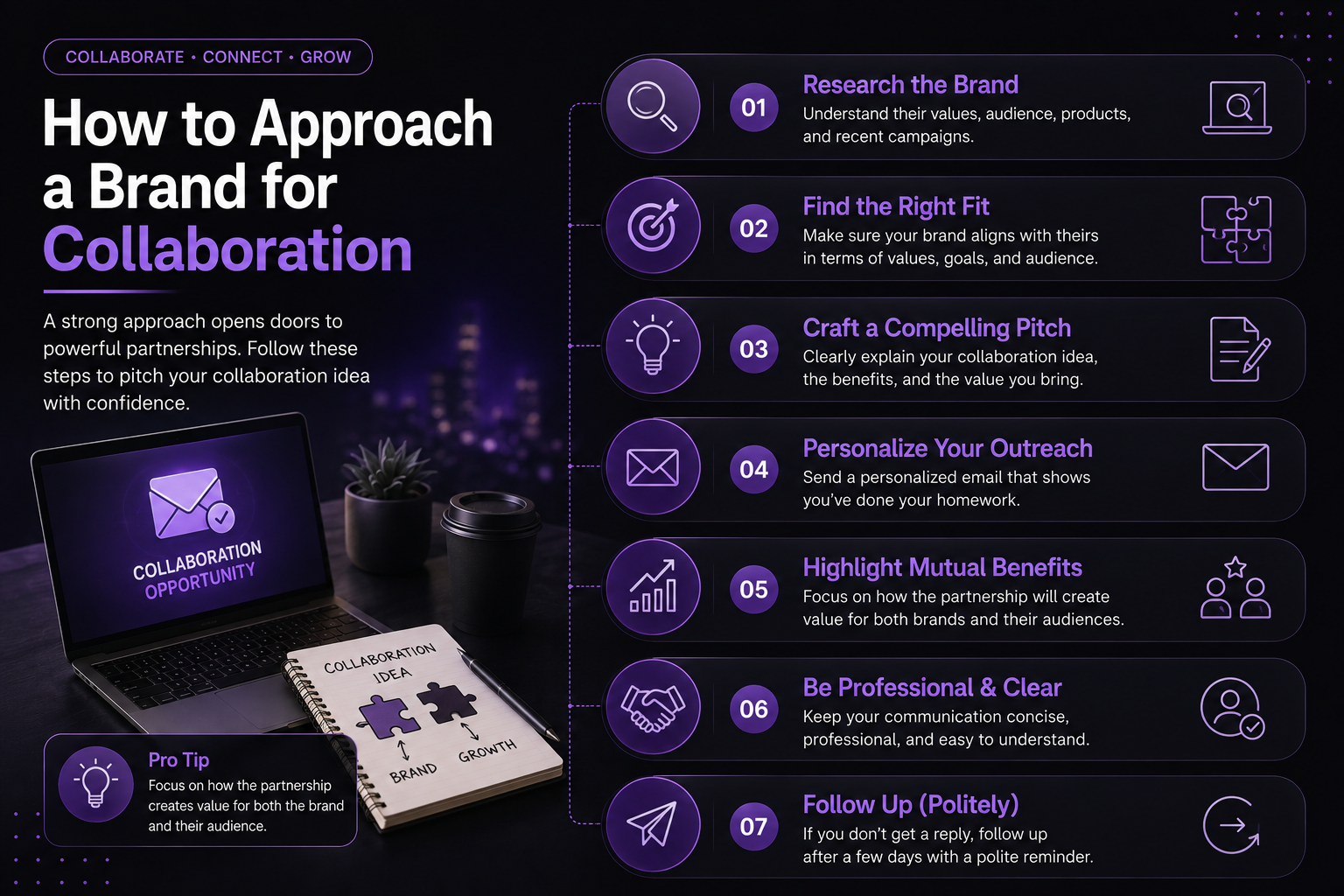
How to Approach a Brand for Collaboration
When contacting a potential partner, keep your message professional and personalized.
First, introduce yourself and your business. Then explain why you selected the brand. Understanding the basics of brand collaborations can help you create a more relevant and effective partnership proposal.
Next, present your collaboration idea and explain how it could benefit both businesses.
For example:
“Hi, we really like the content your brand is creating around fitness and wellness. Our brand focuses on fitness apparel, and we believe our audiences would be highly relevant to each other. We would love to discuss a joint social media campaign featuring both brands.”
Avoid sending the exact same generic message to every company. A personalized proposal shows that you have researched the brand. You can also explore different brand collaboration ideas to find an approach that best matches your goals, audience, and marketing strategy.
.

Measuring the Success of Brand Collaborations
A collaboration should be measured using clear performance indicators.
Important metrics include:
- Reach
- Impressions
- Engagement rate
- Website traffic
- New followers
- Leads
- Conversion rate
- Sales
- Cost per lead
- Customer acquisition cost
- Return on investment (ROI)
For example, if a business spends ₹20,000 on a collaboration and generates ₹60,000 in attributable revenue, the campaign may have produced a positive financial result.
However, sales are not the only measure of success. A brand awareness campaign may focus more on reach, engagement, website visits, or new audiences.
The important thing is to measure the metrics that match the original campaign goal.
Common Brand Collaboration Mistakes
Not every collaboration produces positive results. Businesses should avoid several common mistakes.
Choosing a Partner Only Because of Follower Count
A large audience does not automatically mean a successful campaign.
No Clear Objective
Without a goal, it becomes difficult to determine whether the collaboration worked.
Poor Communication
Both businesses need to communicate regularly about deadlines, content, responsibilities, and expectations.
Ignoring the Audience
A collaboration should be relevant to both audiences. If the partnership feels unnatural, customers may lose interest.
Not Tracking Results
Businesses should collect data throughout the campaign and evaluate the final performance.
Making the Campaign Too Promotional
Customers usually respond better to content that provides entertainment, education, or value rather than constant sales messages.
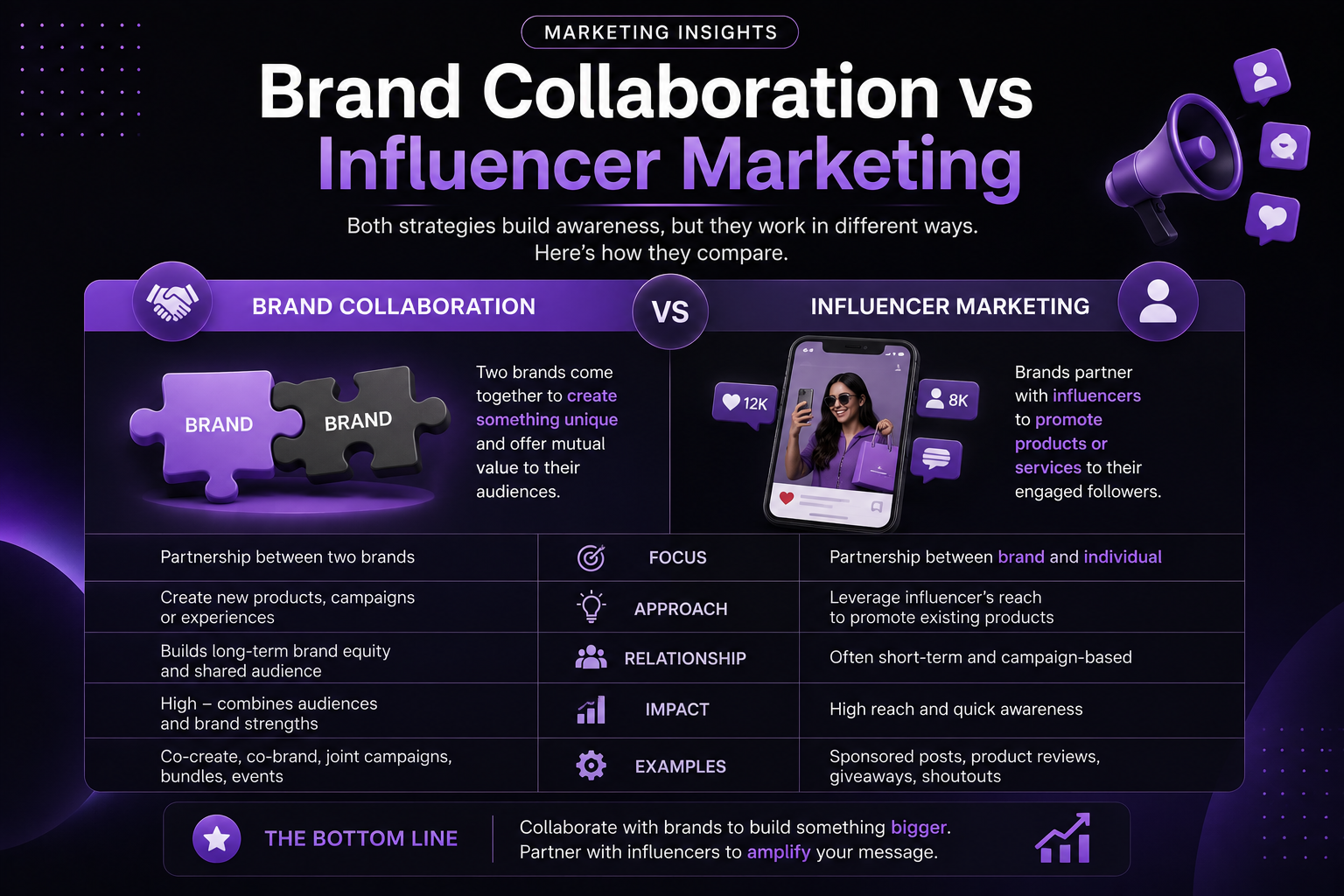
Brand Collaboration vs Influencer Marketing
Although they can work together, brand collaborations and influencer marketing are not exactly the same.
A brand collaboration generally involves two or more businesses working together.
Influencer marketing involves a business partnering with an individual creator who has an audience.
For example:
Brand collaboration:
A clothing company and a footwear company launch a joint campaign.
Influencer marketing:
A clothing company pays a fashion creator to promote its products.
A business can also combine both strategies by asking an influencer to promote a collaborative product launched by two brands.
How Brand Collaborations Can Help Small Businesses
Brand collaborations are not limited to large companies.
Small businesses can benefit significantly from partnerships because they may not have large advertising budgets.
For example, a local bakery could collaborate with a coffee shop. The bakery could provide special desserts while the coffee shop provides beverages. Both businesses could promote the campaign on social media.
This type of partnership can introduce each business to a new but relevant customer group.
Small businesses can also collaborate through Instagram Reels, giveaways, events, referral programs, and educational content without requiring a large budget.
The key is finding a partner with a complementary audience and creating genuine value.

The Future of Brand Collaborations
As digital marketing continues to evolve, brand collaborations are likely to become even more creative.
Social media platforms make it easier for businesses to discover potential partners and reach audiences around the world.
Artificial intelligence is also helping marketers research audiences, analyze campaign performance, generate content ideas, and personalize marketing campaigns.
However, technology alone cannot create a successful collaboration.
Authenticity, creativity, audience relevance, and trust will continue to be important.
Customers want brands to provide experiences and value rather than simply showing advertisements. This makes meaningful partnerships increasingly valuable for modern businesses.
Conclusion
Brand collaborations are a powerful strategy for businesses that want to expand their reach, increase brand awareness, engage new audiences, and create innovative marketing campaigns.
A successful collaboration begins with choosing the right partner. Businesses should look beyond follower counts and focus on audience relevance, brand values, reputation, engagement, and shared objectives.
From product launches and social media campaigns to giveaways, events, content partnerships, and influencer collaborations, there are many ways for businesses to work together.
The most successful brand collaboration strategies are based on mutual benefit. Both brands should contribute value and provide something meaningful to their audiences.
Most importantly, businesses should measure the results of every campaign. By analyzing reach, engagement, leads, conversions, sales, and ROI, marketers can understand what worked and improve future collaborations.
In a competitive digital marketing environment, businesses do not always need to grow alone. The right brand partnership can create new opportunities, strengthen credibility, increase visibility, and help both brands achieve sustainable growth.
auther:shamil